
Customs documents:
guide to completion and dedicated assistance
What are customs documents and why are they essential?
Customs documents are the official paperwork used to declare import, export and transit operations to customs authorities.
The data contained in these documents determines duties, VAT, possible inspections and the overall compliance of the operations.
In the daily management of shipments, containers and individual products, it is common to encounter abbreviations such as IM, EX, T1, T2, MRN, EUR.1, ATR, EUR-MED, in addition to the customs bill, which summarises the completed operation.
Knowing how customs documents and declarations are structured, what information they contain, and in which situations they are used helps improve communication with customs authorities, customers, suppliers and carriers, and ensures that you are prepared in the event of inspections.
Would you like guidance on completing and interpreting the customs documents related to your import/export operations? Get in touch with us: at Tecspedi we support you with dedicated assistance from our Turate office (Como) and in the surrounding areas, both within Italy and across the border (Lugano, Chiasso, Busto Arsizio etc.).
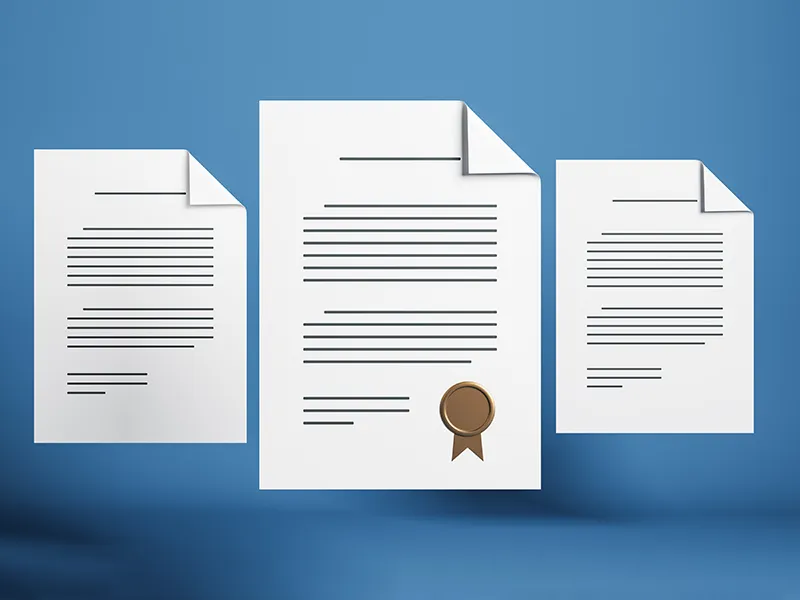
The main customs documents we manage in import/export and transit operations
Customs documents do not all serve the same function.
To provide you with a clear benchmark and clarify any doubts, here is a concise overview of the most commonly used documents:
Customs declaration documents:
Import (IM)
Used to declare the entry of goods into the customs territory. It indicates value, origin, classification and determines the duties and VAT due.
Export (EX)
Document that formalises the exit of goods from the EU. It is also essential for VAT purposes and to prove that the export has taken place correctly.
Movement Reference Number (MRN)
Unique number associated with IM, EX and transit procedures. It is used to track the status of the declaration and monitor potential inspections.
Customs transit documents:
Transit for non-Union goods (T1)
Required when non-Union goods pass through a non-EU country without being cleared.
Transit for Union goods (T2)
Allows Union goods to cross non-EU territories while maintaining their status up to the destination customs office.
Preferential origin documents:
EUR.1
Certifies the preferential origin of goods towards countries with specific agreements, allowing the recipient to obtain reduced duties.
ATR
Circulation document provided for trade between the EU and Turkey.
EUR-MED
Used within the framework of Euro-Mediterranean agreements to certify preferential origin in more complex scenarios.
Summary document
Customs bill
Final document summarising the declaration submitted. It must be retained by the company for accounting and tax purposes.


Do you need clarification?
We answer the most frequently asked questions about customs documents
When working with imports, exports and transit procedures, it is normal to have doubts about which documents to use and what they mean. Here you will find answers to the questions most frequently asked by companies, administrative offices and carriers.
What is the MRN and why is it important?
The MRN is the reference number of the customs movement. It uniquely identifies a declaration (IM, EX or transit) and allows its status to be tracked within customs systems.
When are IM and EX used?
IM is the import declaration (incoming goods); EX is the export declaration (outgoing goods). Both are formal documents that determine tax obligations and potential inspections.
What is the difference between T1 and T2?
T1 concerns non-Union goods; T2 concerns Union goods that cross a non-EU country while maintaining their original status until the destination customs office. Both allow transit without a new customs clearance during the route.
When are EUR.1, ATR or EUR-MED required?
They are used when goods fall under preferential agreements between the EU and third countries. They allow the foreign recipient to benefit from preferential duty treatment based on the preferential origin.
Who prepares customs documents and how must they be stored?
Completion is normally entrusted to a specialised operator. The company must provide accurate data and retain the documentation for any post-clearance inspections.
Not sure which customs documents are required for your shipments? Confused about how to complete, read and store them correctly? Contact us: at Tecspedi we provide an operational guide and dedicated assistance in Como and the surrounding areas (Lugano, Chiasso, Busto Arsizio etc.).


